
5 Winter Prevention Tips for WA Cat Owners: Vaccines, Hydration & Warmth
Winter in Western Australia may not bring the bitter cold of the southern states, but the drop in temperatures — particularly in Perth, the South West, and the Great Southern — is more than enough to affect your cat’s health. From chilly nights to increased exposure to respiratory bugs, the cooler months introduce real risks for our feline friends. Proactive cat care in winter doesn’t have to be complicated; it just requires a little planning and the right knowledge.
Here are five essential tips every WA cat owner should act on before and during winter.
1. Stay Up to Date with URI Vaccines
Upper Respiratory Infection (URI) — commonly known as cat flu — becomes more prevalent during the colder months. The viruses responsible, including feline herpesvirus and calicivirus, spread easily between cats and can cause sneezing, nasal discharge, eye inflammation, and lethargy.
The best defence is a current vaccination. If your cat is overdue, book a booster with your vet before winter sets in. This is especially important for cats who spend any time outdoors, visit boarding facilities, or live in multi-cat households.
Checklist item: Check your cat’s vaccination record and schedule a URI booster if it’s been more than 12 months.
Want to understand what illnesses your cat may be vulnerable to? Read more about common cat illnesses and how to recognise early warning signs.
2. Keep Fresh Water Available at All Times
It might seem counterintuitive, but cats can become mildly dehydrated in winter. When it’s cold, cats tend to move less, eat less wet food, and sometimes avoid their water bowl if the water feels too cold. Dehydration puts unnecessary strain on the kidneys, an organ cats are already predisposed to having issues with as they age.
Practical ways to encourage drinking during winter:
- Place multiple water bowls around the home in warm spots away from draughts
- Consider a pet water fountain, which keeps water moving and slightly warmer
- If your cat eats dry food, add a little warm water to it
- Check and refresh water bowls twice daily
Checklist item: Set a daily reminder to refill and check water bowls morning and evening.
3. Provide a Warm, Draught-Free Sleeping Space
Cats love warmth — that’s no secret — but in winter, they genuinely need it. Prolonged exposure to cold draughts can contribute to joint stiffness, immune suppression, and general discomfort, particularly in senior cats or those with arthritis.
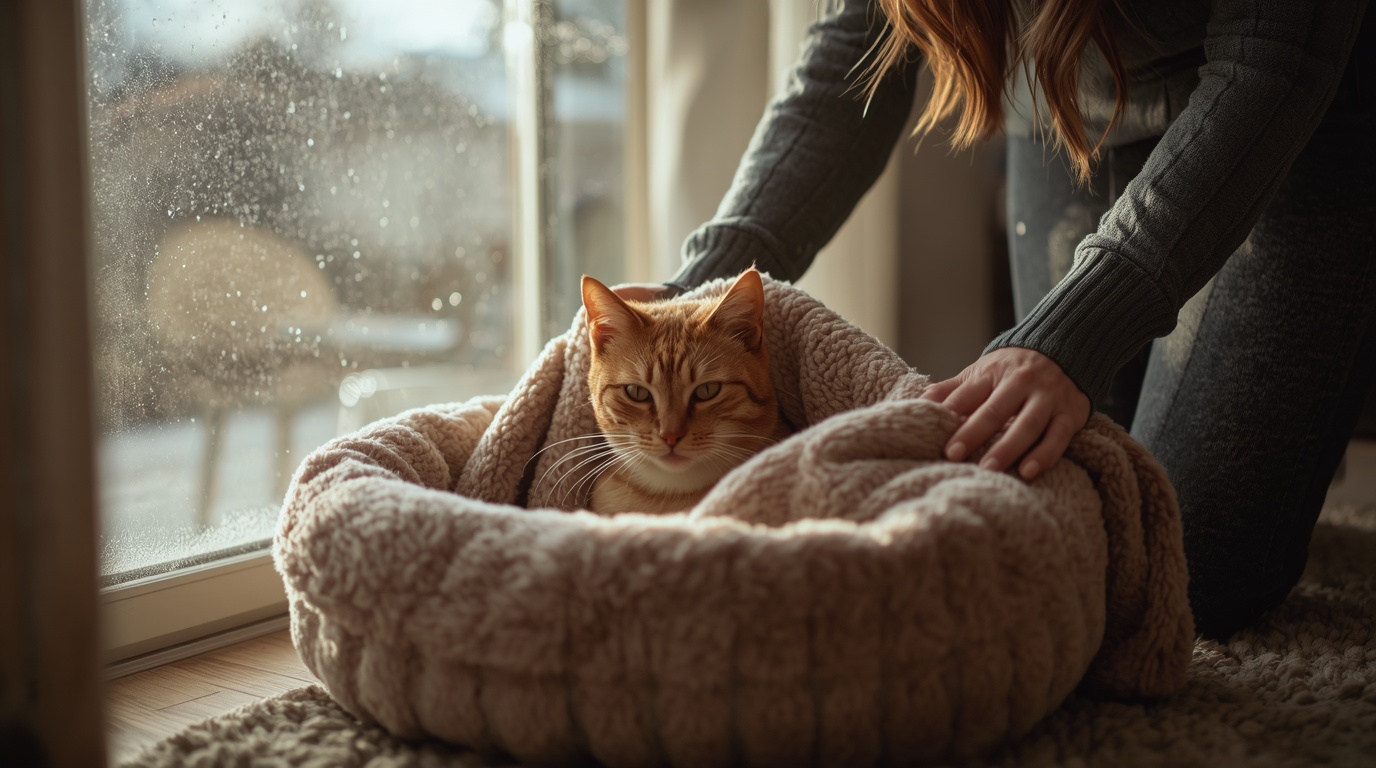
Invest in a heated pet bed or a self-warming mat that reflects your cat’s own body heat. Place it in a quiet, low-traffic area of the home away from doors and windows. If your cat sleeps outdoors or has access to a garage or laundry, ensure there is an enclosed, insulated space they can retreat to.
Practical options for WA homes:
- Self-warming beds — no electricity required, use thermal lining
- Electric heated pads — great for older or arthritic cats; use only vet-approved models
- Blanket nests — a simple fleece blanket in a cardboard box can make a significant difference
Checklist item: Set up or upgrade your cat’s sleeping area with a warm, draught-free bed before night temperatures drop.
Keeping your cat indoors overnight during winter also dramatically reduces their risk of injury, illness, and stress from the elements. Find out more about the benefits of keeping your cat indoors and how to make the transition easier.
4. Maintain Year-Round Parasite Prevention
Fleas don’t disappear in winter — especially in WA’s milder climate. While flea activity does slow down in genuinely cold conditions, Western Australian winters are rarely cold enough to halt the flea lifecycle entirely. A single lapse in parasite prevention can result in an infestation that’s difficult and costly to manage.
Continue monthly flea, tick, and worming treatments throughout winter. If your cat spends any time outdoors, check for paralysis ticks after outdoor excursions, as these remain active in coastal and bushy areas of WA during the cooler months.
Checklist item: Check your flea, tick, and worming treatments are up to date and set monthly reminders.
It’s also worth knowing that parasite stress and skin irritation can contribute to behavioural changes and anxiety in cats. If you notice unusual behaviour alongside itching or restlessness, learn about how stress in cats can manifest and what you can do to help.
5. Monitor for Seasonal Behaviour Changes
Cats are creatures of habit, and winter disrupts their routine — less daylight, less outdoor time, and changes in household activity can all affect their mood and behaviour. Some cats become more clingy and vocal; others withdraw. Both can be signs that your cat needs a little extra attention and environmental enrichment during the colder months.
Watch for these signs that your cat may be struggling with the seasonal shift:
- Reduced appetite or excessive eating
- Hiding more than usual
- Reluctance to use the litter box (often a sign of UTI or discomfort)
- Excessive grooming or coat changes
- Lethargy lasting more than a day or two
Good cat care in winter includes mental stimulation as much as physical warmth. Introduce puzzle feeders, extra play sessions, or window perches so indoor cats stay engaged even when the weather keeps them inside.
Checklist item: Spend at least 10–15 minutes of interactive play with your cat daily throughout winter.
Your WA Winter Cat Care Checklist
Here’s a quick summary of everything to action before and during the cooler months:
- Book a URI vaccine booster if overdue
- Place multiple fresh water sources in warm spots around the home
- Set up a heated or self-warming bed in a draught-free location
- Continue monthly flea, tick, and worming treatments without interruption
- Monitor for behavioural changes and increase daily play and enrichment
Final Thoughts
Western Australia’s winters are gentle by national standards, but they still pose genuine health risks for cats — especially those who are young, elderly, or managing existing conditions. Thoughtful cat care in winter means staying ahead of illness rather than reacting to it.
By acting on these five tips now, you’ll give your cat the best chance of sailing through the cooler months healthy, comfortable, and happy. If you ever notice symptoms that concern you — persistent sneezing, lethargy, changes in eating or drinking — always consult your local vet promptly.
Your cat relies on you to be their first line of defence. This winter, make it count.
Also read – Can Cats Get Hypothermia in Perth, WA? Signs & Prevention
🩺 Looking for a Local Vet? Port Kennedy’s Here for You!
Also visit: